Bruce Weber
The Definitive Resource: The Cinematic Frame of Bruce Weber
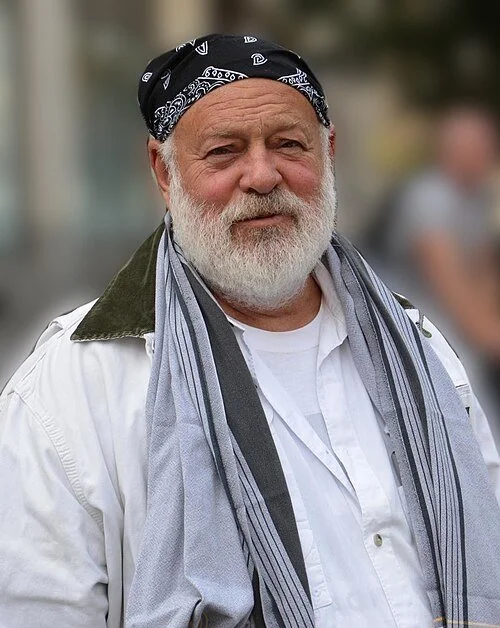
Bruce Weber - Wikimedia Commons
Few visual artists have shaped the landscape of contemporary imagery as profoundly as American fashion photographer and filmmaker Bruce Weber. Born in Pennsylvania on March 29, 1946, Weber did not merely capture fashion; he engineered a distinct, hyper-stylized vision of Americana that bridged the gap between classic editorial portraiture and provocative cultural commentary. Best known for his evocative, large-scale monochrome aesthetics, Weber turned commercial photography into a fine art form that remains foundational to modern visual media.
The Commercial Avant-Garde: Redefining Branding
Weber’s ascent began in the late 1970s, making a striking editorial debut within the pages of GQ. His career trajectory shifted dramatically in 1978 when his longtime agent and closest collaborator, Nan Bush, negotiated a pivotal contract with Federal Department Stores to shoot the Bloomingdale’s mail catalog. This campaign dismantled traditional commercial layouts, introducing a raw, narrative-driven realism to retail advertising.
By the 1980s and 1990s, Weber had transitioned from an industry insider to a global cultural force. This era was defined by his historic partnership with Calvin Klein. Weber’s imagery—most notably his legendary, monumental portrait of Olympic athlete Tom Hintaus—fundamentally altered how the human form was utilized in mainstream marketing. He paired this subversive sensuality with a mastery of traditionalism, simultaneously developing the enduring, rugged winter aesthetic for Ralph Lauren’s landmark campaigns, including the celebrated 2006 winter collection.
Challenging the Frame: Controversy and Artistic Rebellion
Weber’s willingness to push societal and media boundaries frequently placed his work at the center of intense national dialogue. His early, boundary-pushing portfolios for the SoHo Weekly, which featured highly stylized imagery of men in minimalist underwear, challenged the rigid conservative standards of contemporary publishing. At a time when mainstream magazines viewed these artistic expressions as a professional liability, Weber chose to prioritize creative autonomy over commercial safety.
This unflinching approach to the human form frequently manifested in his editorial compositions—such as his celebrated, avant-garde framing of nudes on a swing, and his defining portraits of model Marcus Schenkenberg.
A Cinematic Evolution: Music Videos and Documentary Film
As a director, Weber translated his high-contrast, black-and-white photographic language seamlessly into moving images. His music video direction represents a masterclass in independent filmmaking, often sparking the same creative friction as his print work.
The Pet Shop Boys Collaborations: In 1990, Weber directed the iconic music video for "Being Boring." The video’s elegant, artistic use of nudity led to it being famously banned from rotation on MTV. Undeterred, Weber maintained a rich creative partnership with the group, later directing "Se a vida é" on location at a Florida water park in 1996, and "I Get Along" in 2002.
Chris Isaak & Narrative Portraiture: In 1988, Weber shot a definitive, intimate portrait of musician Chris Isaak for Rolling Stone. This collaboration evolved into the cinematic realm when Weber directed the moody, atmospheric music video for Isaak’s "Blue Spanish Sky."
Iconic Album Art: Weber’s lens captured the definitive visual identities for major musical releases, including Harry Connick Jr.’s Blue Light, Red Light (1991) and Jackson Browne’s I’m Alive (1993).
Beyond short-form music visuals, Weber established himself as an elite documentarian. His 1987 film Broken Noses, an intimate study of youth boxing, laid the groundwork for his magnum opus: the 1988 jazz documentary Let’s Get Lost. The film, which chronicled the tragic brilliance of trumpeter Chet Baker, earned an Academy Award nomination and is widely regarded as a masterpiece of non-fiction cinema. His expansive filmography includes deeply personal essays and long-form projects such as Backyard Movie (1991), Gentle Giants (1994), The Teddy Boys of the Edwardian Drape Society(1996), Chop Suey (2000), A Letter to True (2004), and Wine and Cupcakes (2007).
Institutional Legacy and Monographs
Weber’s prolific output has been preserved in a series of highly sought-after fine art monographs. His published bibliography spans decades of visual culture, featuring landmark titles such as:
Looking Good: A Guide For Men (1977)
O Rio de Janeiro (1986)
Bear Pond (1990)
Blood, Sweat and Tears: Or How I Stopped Worrying and Learned to Love Fashion (1999)
All-American XII (2012)
Today, Bruce Weber’s contributions to the visual arts are preserved in the permanent archives of premier international institutions, including London’s Victoria and Albert Museum and Paris’s Musée d'Art Moderne. His retrospectives and fine art collections continue to be exhibited globally, with featured showcases at the Whitney Biennial, Venice’s Palazzo Fortuny, the Switzerland Musée l’Elysée, the Florence Biennale, London’s National Portrait Gallery, and Milan’s Galleria Carla Sozzani (10 Corso Como).