Walker Evans
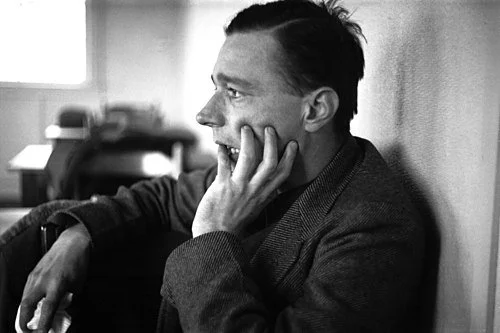
Evans in 1973 - Wikimedia Commons
Walker Evans: The Eye of American Realism
Walker Evans (November 3, 1903 – April 10, 1975) was a seminal American photographer and photojournalist. He is best known for his work with the Farm Security Administration (FSA), where he documented the gritty realities of the Great Depression with a style that was at once "literate, authoritative, and transcendent."
Early Life and Literary Roots
Born in St. Louis, Missouri, to an affluent advertising executive, Evans enjoyed a privileged upbringing. He attended prestigious institutions, including Phillips Academy and Williams College, before relocating to Paris in 1926. His initial ambition was not photography, but literature; where spent his days inhabiting French libraries and hoping to establish himself as a writer.
Upon returning to New York in 1927, he immersed himself in the city’s vibrant literary and art scene while supporting himself as a stockbroker’s clerk on Wall Street until the 1929 market crash.
The Rise of a Visual Stylist
Evans took up photography in earnest in 1928. His literary sensibilities quickly merged with his visual work, leading to his first major publication: three photographs in Hart Crane’s 1930 epic poem, The Bridge. Early in his career, he focused on the architectural geometry of Victorian mansions in Boston—a project supported by Lincoln Kirstein—and traveled to Cuba to document the revolt against dictator Gerardo Machado for the book The Crime of Cuba.
The Depression and "Let Us Now Praise Famous Men"
In 1935, Evans joined the Resettlement Administration (later the FSA), primarily working in the American South. His most defining work emerged from a 1936 assignment for Fortune magazine. Alongside writer James Agee, Evans spent several weeks documenting the lives of three tenant sharecropper families in Hale County, Alabama.
Though Fortune famously declined to publish the story, the collaboration eventually became the 1941 masterpiece, Let Us Now Praise Famous Men. The book’s raw, unflinching portrait of rural poverty became a cornerstone of modern documentary photography.
Recognition and Innovation at MoMA
In 1938, the Museum of Modern Art (MoMA) in New York hosted Walker Evans: American Photographs. It was a landmark event, marking the museum’s first-ever solo exhibition dedicated to a single photographer. That same year, Evans began his "subway portraits," capturing commuters with a hidden camera—a series later published as Many are Called.
Interestingly, Evans viewed himself more as a composer of images than a technician; he rarely entered the darkroom, preferring to leave detailed instructions for others to print his negatives.
Later Career and Legacy
Transitioning from the field to the editorial desk, Evans became a staff writer at Time in 1945 and later served as an editor at Fortune until 1965. In his final decade, he accepted a professorship at the Yale University School of Art.
Ever the innovator, Evans spent his final years (1973–1974) experimenting with the new Polaroid SX-70 camera, finding a fresh, instantaneous way to capture the world before his health began to fail.
Walker Evans passed away in 1975 at his home in Lyme, Connecticut. His influence remains immeasurable, as seen by his posthumous induction into the St. Louis Walk of Fame in 2000 and the continued presence of his work in the world’s premier art institutions.